
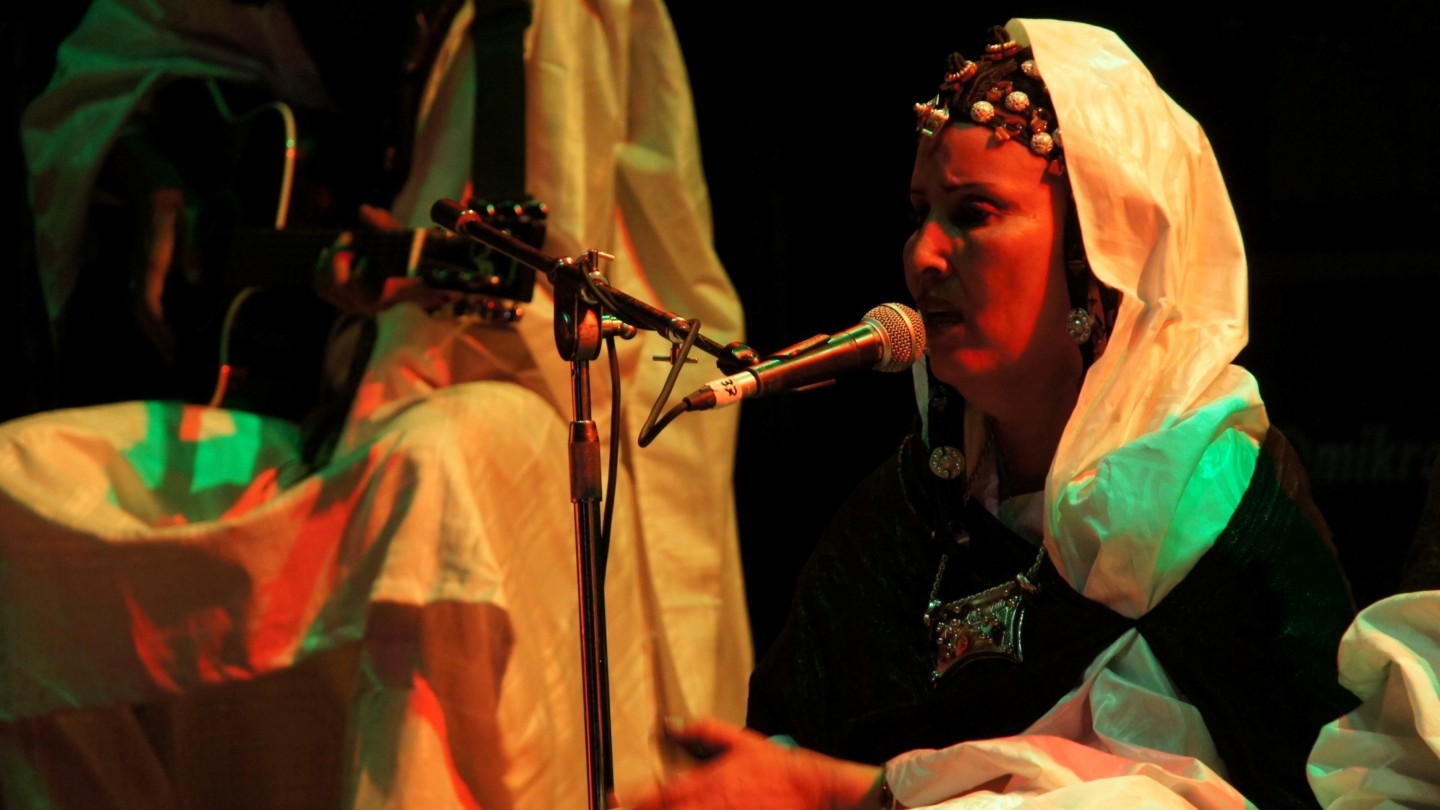
The name AZALAI references one of the world’s oldest trade routes: the Saharan salt caravan paths traveled by Tuareg and other nomadic peoples for centuries. In reimagining this concept as a “laboratory,” the EU Culture Programme initiative transformed the physical caravan into a cultural caravan—a moving ensemble that carried music, memory, and cross-cultural dialogue across Europe.
The project emerged at a moment of political urgency. In 2012, the Festival au Désert in Timbuktu, Mali—a celebrated beacon of world music and cultural exchange since 2001—ceased operations due to the military conflict in northern Mali. Rather than allowing this spirit of encounter to disappear, AZALAI extended it: bringing the musicians, philosophies, and energies of that festival into Europe, inviting European artists into dialogue with African traditions, and creating new spaces where music could be both a political and artistic act.
Led by Fabbrica Europa (Florence) and coordinated by Marta Amico, AZALAI operated as an open ensemble. Unlike a fixed band, it assembled different combinations of musicians at each stop—sometimes 8 musicians, sometimes 12, sometimes more. Core ensemble members (Said Tichiti on guembri, Dimitri Grechi Espinoza on saxophone, Kandia Kora on kora and voice, Hilaire Penda on bass, among others) formed the backbone, while local and visiting musicians joined each residency and performance. This rotating structure reflected the project’s philosophy: that genuine cultural exchange happens through deep listening, improvisation, and the willingness to learn from one another—regardless of whether you’ve played together before.
